Instruments & Ritual
The Himalayan Gong: Reading Its Symbols and Learning to Play It
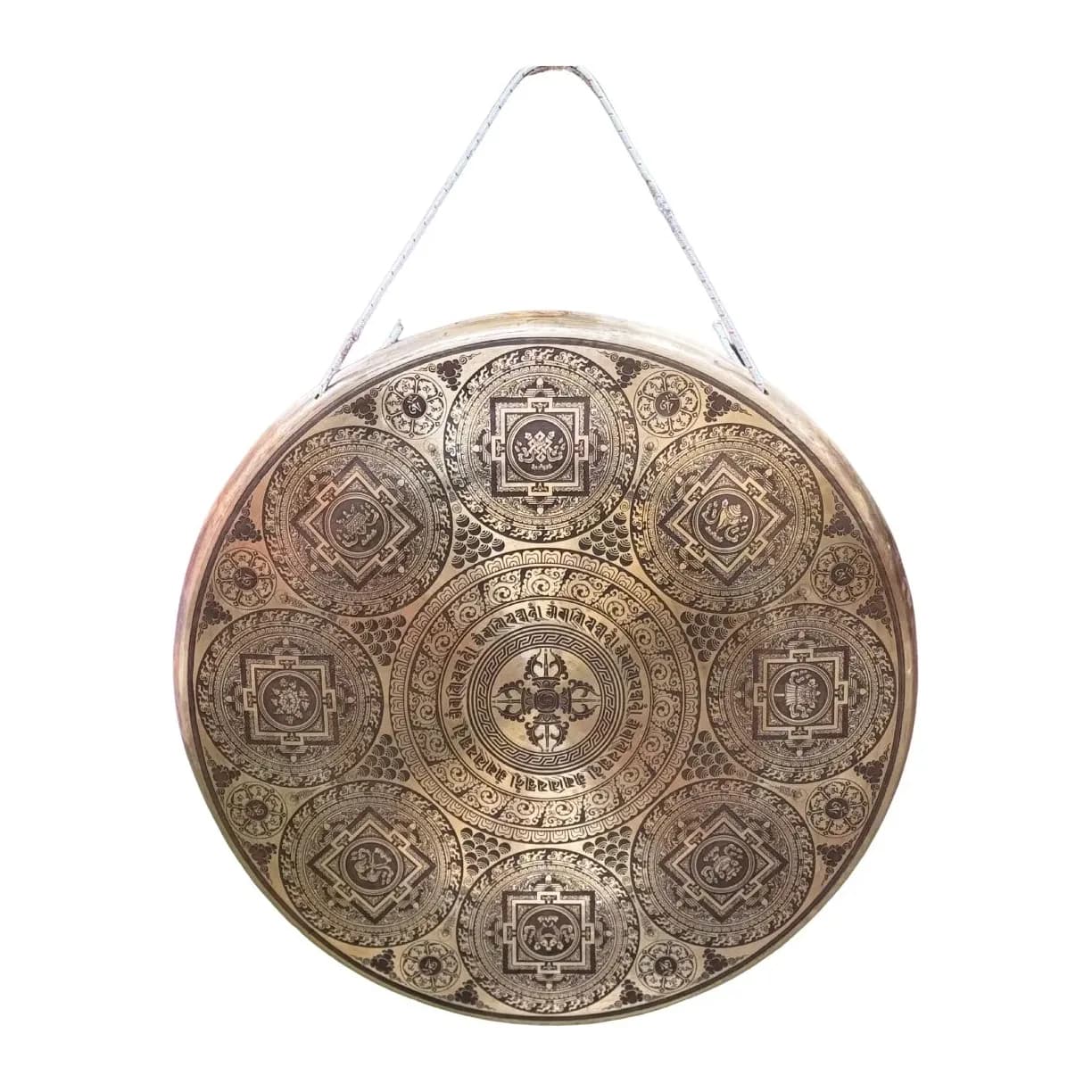
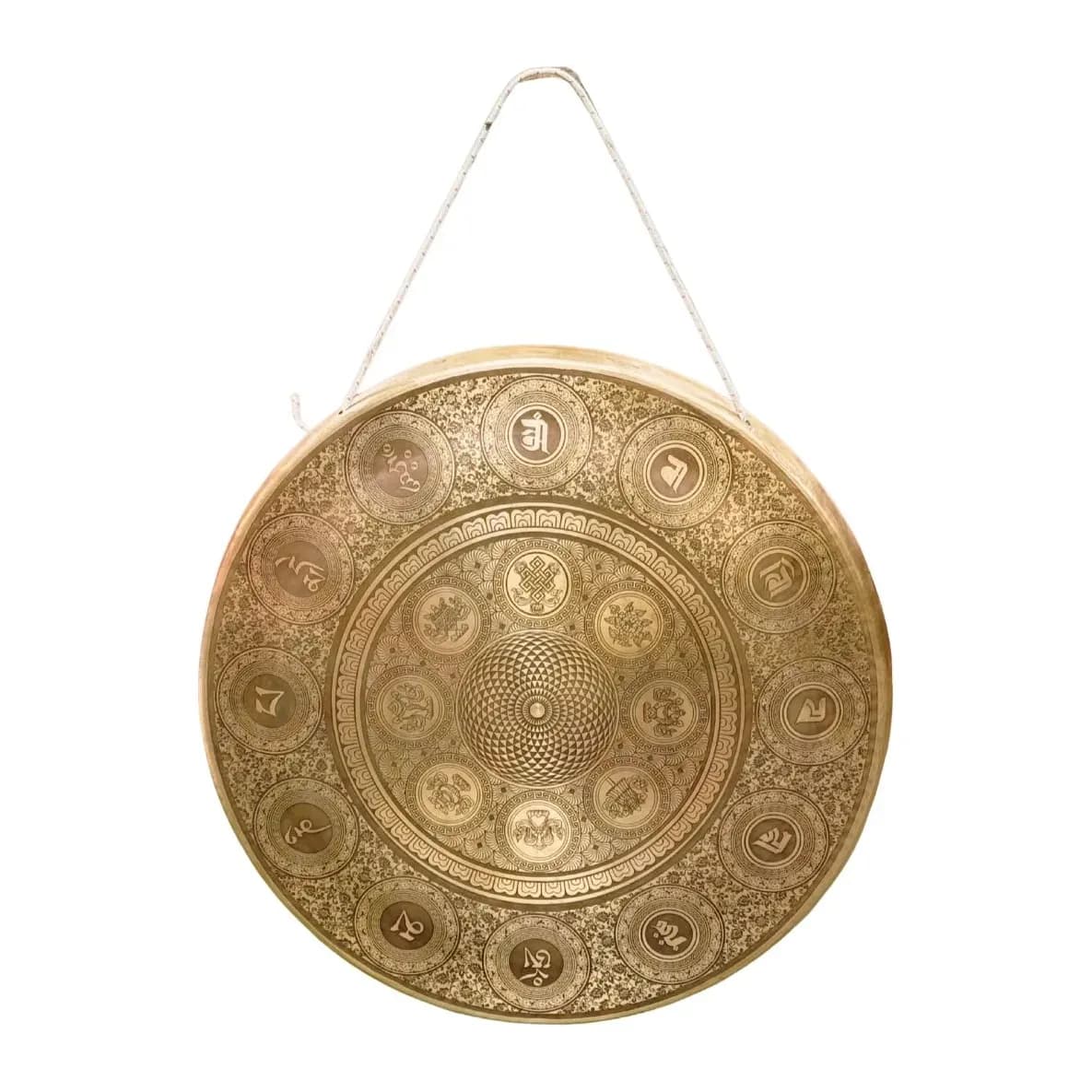
A struck gong marks the beginning and end of practice across the Himalayas. Here's what the etched motifs mean, and how to play one properly.
Turn off the main road in Patan and it reaches you first as sound — a fast, bright, uneven tapping, a dozen hammers and not one of them keeping time. That noise has come out of these courtyards for a thousand years. What it makes takes seven stages and four pairs of hands, and no two pieces leave sounding quite alike. That last part is the whole point: it's the thing a machine can't copy.
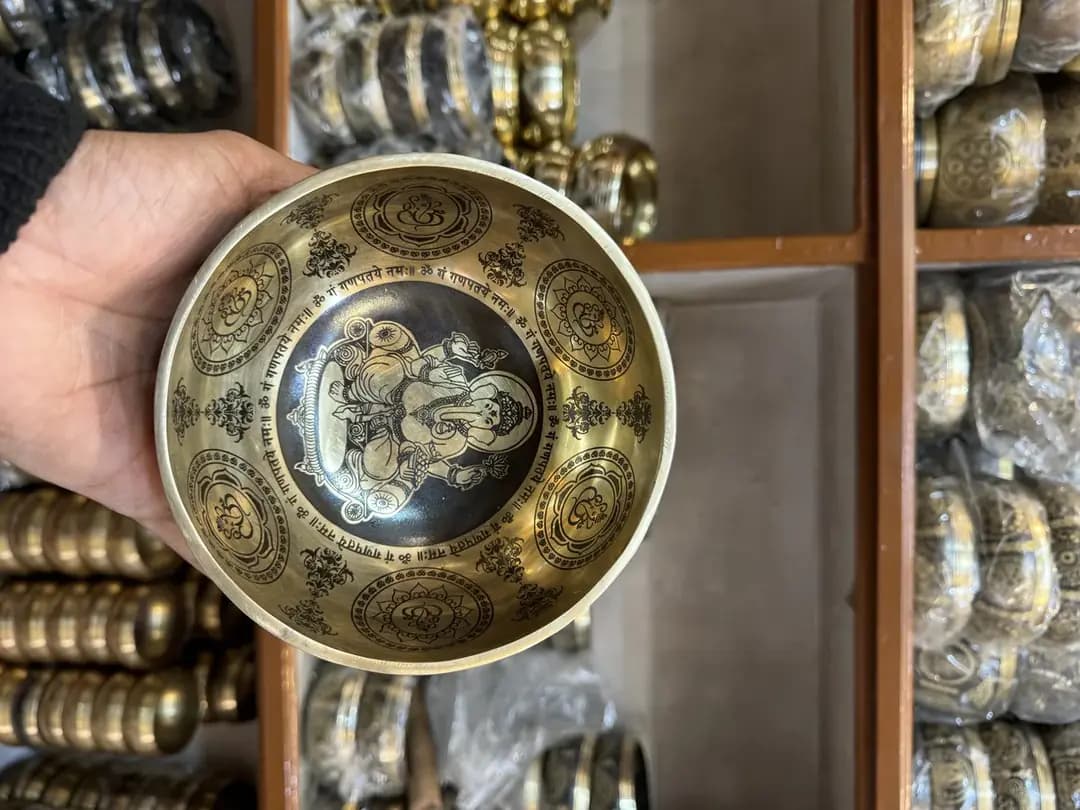
Copper and tin, poured into a disc. Get the ratio wrong and nothing later will save it.
Three or four smiths, one anvil, several thousand blows — a flat disc walked up into a bowl, no mould.
Played, listened to, thinned a hair, played again — until the note holds and nothing wobbles.
“My grandfather hammered. My father hammered. I hammer. The bowl does not care what year it is.”
The short version is three moves. The real one is seven.
Copper and tin melt together in a crucible and pour into a shallow mould. Too much tin and it cracks under the first blows; too little and it comes out dull. Nothing you do later fixes a bad pour.
Heated over a coal fire until they glow a dull orange, three to five discs are stacked and struck as one, the stack turned constantly so the heat stays even.
Three or four smiths around one anvil, striking in rotation, each blow landing a few millimetres from the last, walking a flat disc up into a curve. No mould. A medium bowl takes several thousand blows.
Hammering work-hardens bronze until it would crack sooner than bend, so the bowl goes back in the fire and is quenched soft again — a cycle repeated five to fifteen times before the shape is close.
Cold hammering over a stake sets the last of it: the flare of the wall, the thickness of the rim, the flatness of the floor. The rim is where the note is decided.
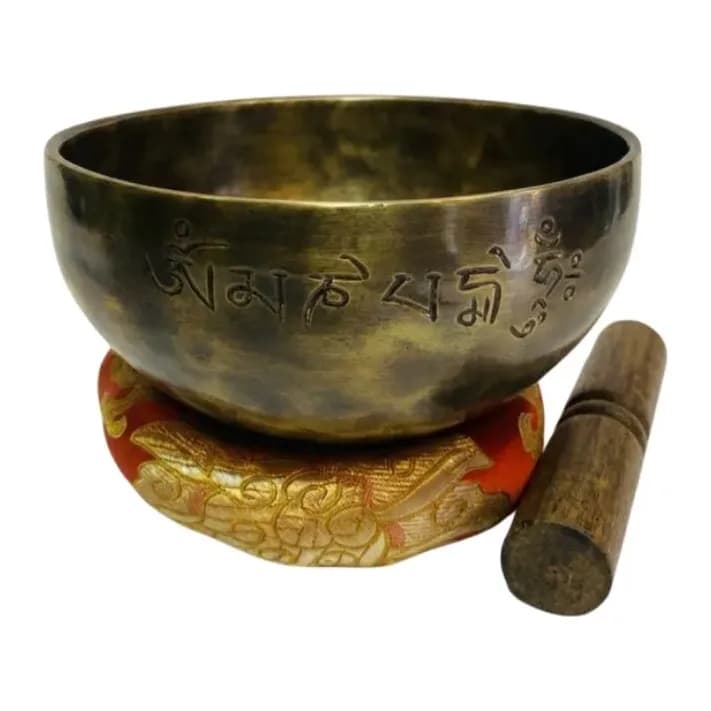
Filed and sanded, then cut by hand if the order asks for it — mantras, Buddha figures, the eight symbols. The black and full-moon finishes are drawn out by controlled oxidation, never paint.
Played — struck and rimmed — and either kept or sent back for a few more blows. A clear strike, a long even sustain, a rim tone that builds without grabbing, and no wobble that reads as a fault.
The alloy
Near four parts copper to one part tin — enough tin to ring for a long time, not so much it turns brittle.
The making
Two days for a small plain piece, up to two weeks for a large decorated one — most of it in the fire and under the hammer.
The shipping
Wrapped so the rim can't take a knock, sent anywhere. Free over AUD 150.
The returns
Thirty days to send a piece back, unplayed, if its voice turns out not to be yours.
The pieces we'd put in your hands first, chosen by our makers.
Sales are just getting started — check back soon to see which pieces our community loves most.
Shop all piecesDiscover the stories, traditions, craftsmanship and knowledge behind our handcrafted Himalayan instruments.
View all articlesA struck gong marks the beginning and end of practice across the Himalayas. Here's what the etched motifs mean, and how to play one properly.
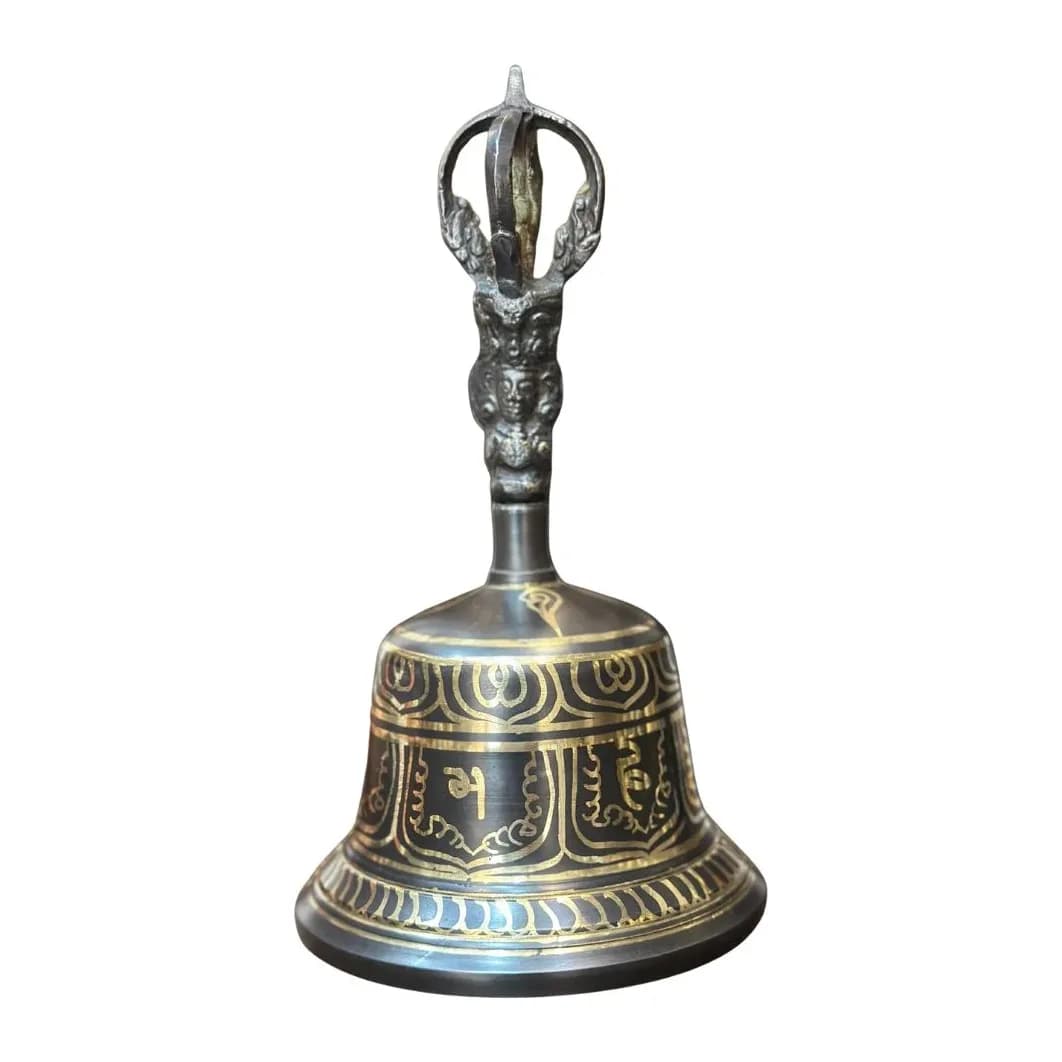
For over a thousand years, one community in Nepal's Kathmandu Valley has shaped the bronze objects at the center of Himalayan ritual life.
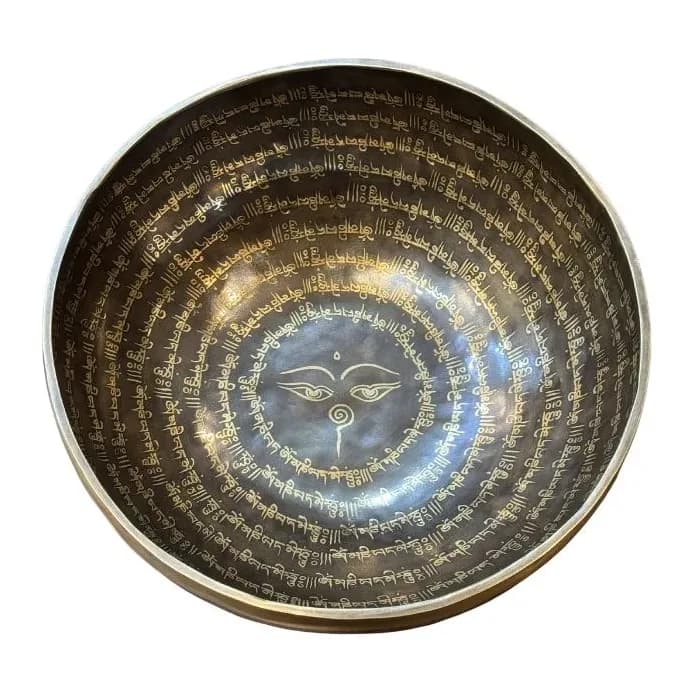
Inside the Patan workshops where a flat disc of bronze becomes a resonant singing bowl — hammered by hand, annealed by fire, and tuned by ear.
Be the first to know when a new collection drops — plus sound healing insights and quiet inspiration, never more than twice a month.
We respect your privacy. Unsubscribe anytime.