Instruments & Ritual
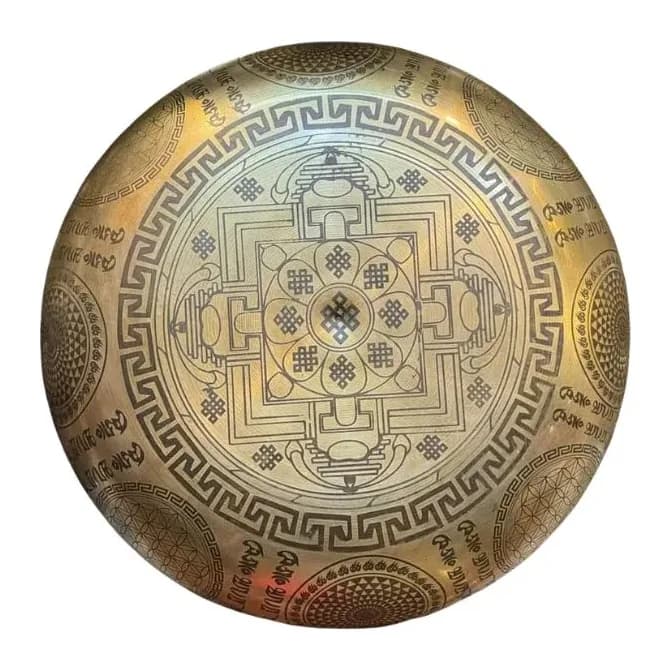
The Himalayan Gong: Reading Its Symbols and Learning to Play It
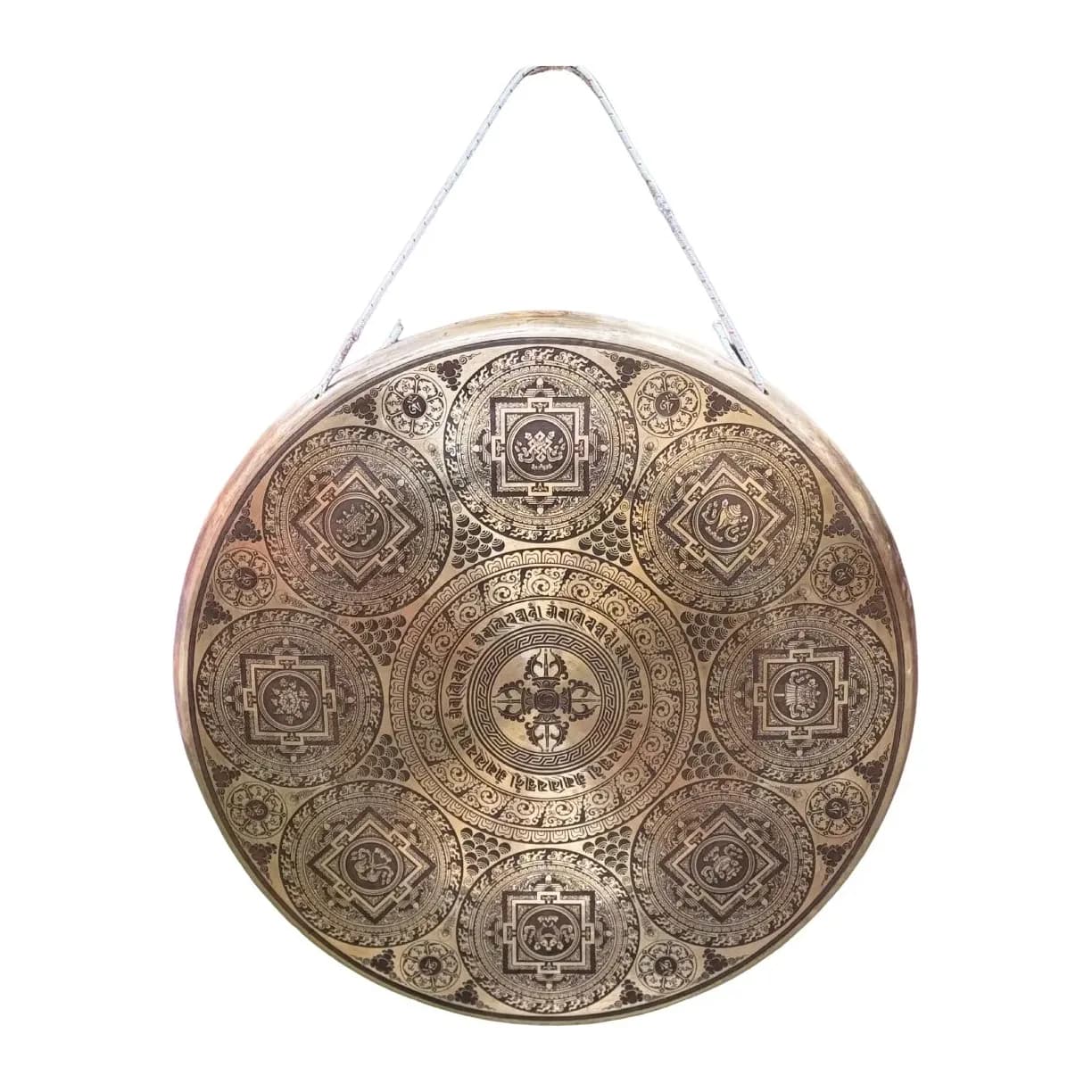
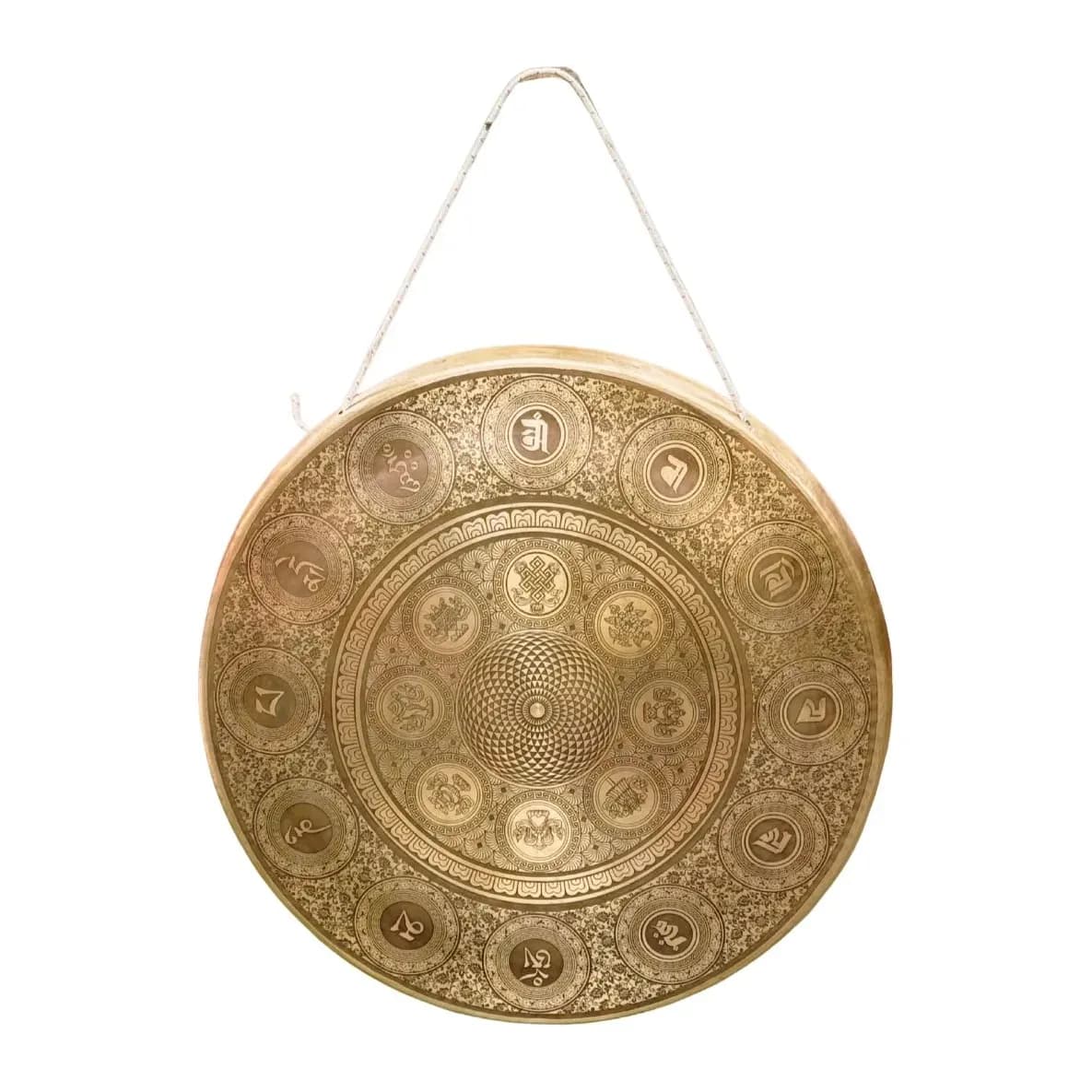
A struck gong marks the beginning and end of practice across the Himalayas. Here's what the etched motifs mean, and how to play one properly.
Size, tone, and intention. A practical guide to picking a bowl whose voice actually matches how you plan to use it.
Most first-bowl regret comes from one mistake: buying for looks and discovering the sound doesn't suit the use. Work in the other direction — decide what the bowl is for, and the size, weight, and finish follow from that.
This is a genuine trade-off, not a quality ranking. Hand-hammered bowls have thicker-and-thinner walls, which produces multiple overtones layered over the fundamental — a living, wavering sound. Machine-made (spun and lathe-finished) bowls have uniform walls, which produces a cleaner, more predictable, more repeatable single note.
If you want a bowl that sounds different depending on where you strike it, buy handmade. If you want a bowl that sounds the same every time and pairs cleanly with other instruments, buy machine-made. Both are real instruments; they are answering different questions.
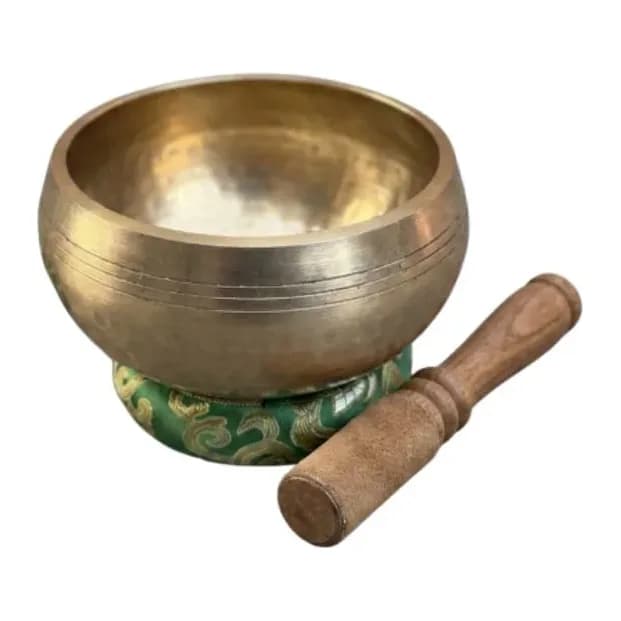
Larger and heavier means lower. A 12cm bowl typically lands in the higher octaves and speaks almost instantly. A 25cm bowl may take several seconds of rimming before it opens up, then holds a low tone for half a minute. Weight matters as much as diameter: two bowls of the same width can be an octave apart if one is twice as thick.
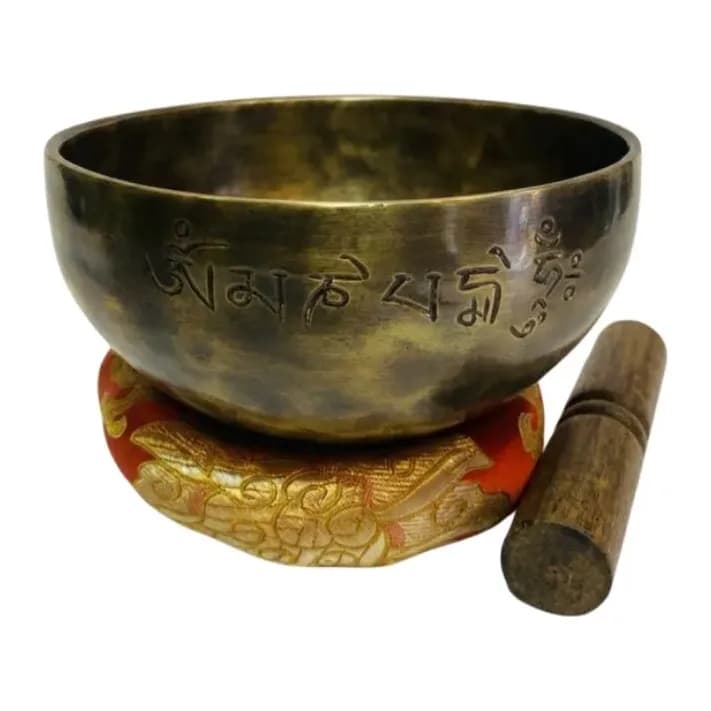
A bowl is useless without a mallet that fits it. Small bowls want a slim wooden striker; large bowls need a heavy padded or leather-wrapped mallet with enough mass to move the wall. A ring cushion is not optional for anything above about 15cm — set directly on a hard surface, the bowl damps against the table and loses most of its sustain.
Buy one bowl you like the sound of rather than three you like the look of. The second bowl is a much easier decision once your ear knows what it's listening for.
A struck gong marks the beginning and end of practice across the Himalayas. Here's what the etched motifs mean, and how to play one properly.
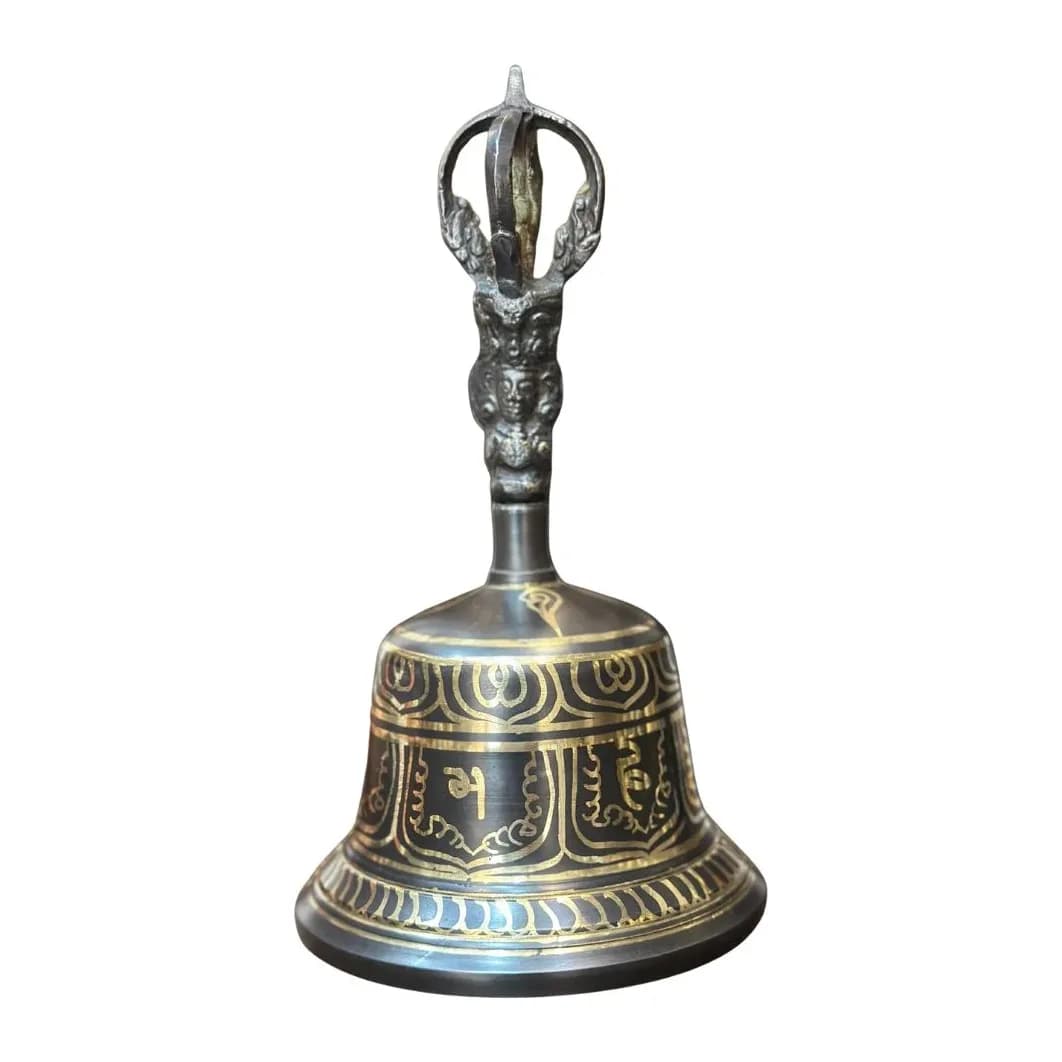
For over a thousand years, one community in Nepal's Kathmandu Valley has shaped the bronze objects at the center of Himalayan ritual life.
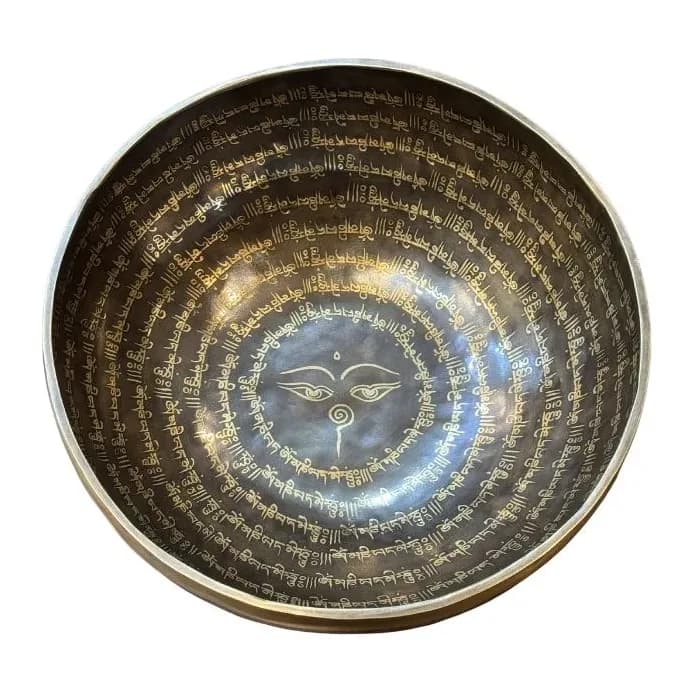
Inside the Patan workshops where a flat disc of bronze becomes a resonant singing bowl — hammered by hand, annealed by fire, and tuned by ear.