Craftsmanship
How Singing Bowls Are Handcrafted in Nepal
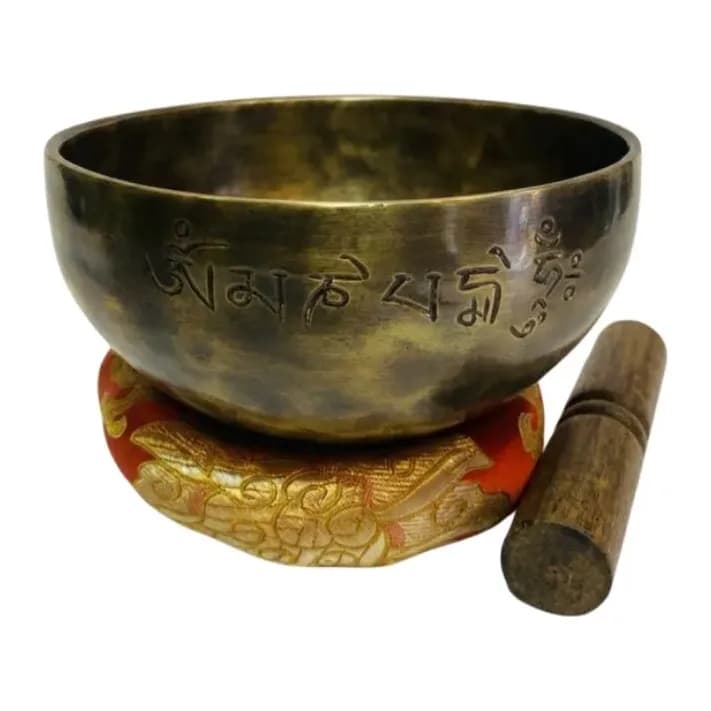
Inside the Patan workshops where a flat disc of bronze becomes a resonant singing bowl — hammered by hand, annealed by fire, and tuned by ear.
Nearly every listing claims seven metals aligned to seven planets. Metallurgical analysis tells a simpler and more interesting story.
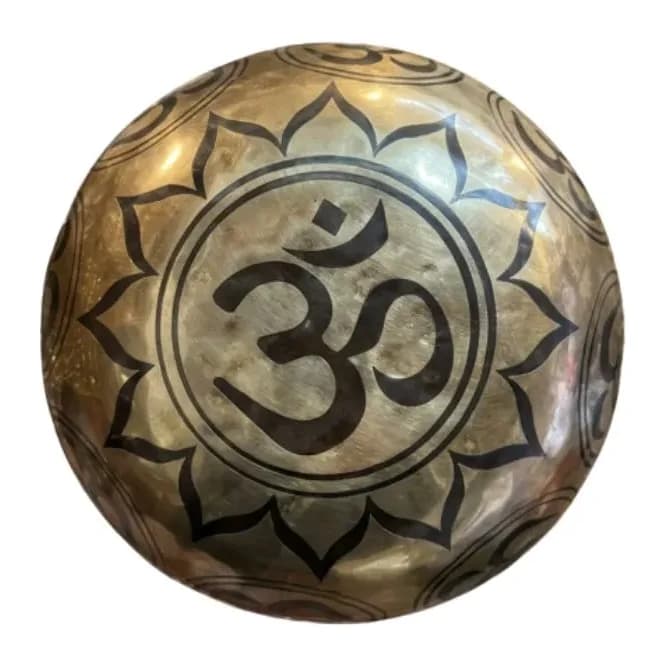
You have almost certainly read the claim: a genuine Himalayan singing bowl is forged from seven sacred metals, each corresponding to a planet — gold for the sun, silver for the moon, mercury for Mercury, copper for Venus, iron for Mars, tin for Jupiter, and lead for Saturn. It is a lovely story. It is also, in the overwhelming majority of cases, not what is in the bowl.
When antique and modern bowls have been submitted to spectrographic analysis, the consistent result is bell bronze: copper and tin in roughly a 4:1 ratio, with trace amounts of iron, zinc, and lead that are typical impurities of pre-industrial smelting rather than deliberate additions. Gold and silver, when present at all, appear at levels far below what would affect either the metallurgy or the tone.
This is not a scandal. High-tin bronze is precisely the right material — it is the same alloy European bell founders converged on independently, for the same acoustic reasons. The tradition arrived at an excellent answer.
“Two metals, correctly proportioned, will out-sing seven metals thrown together on principle.”
The seven-metals framing is genuine to the region — it belongs to Ayurvedic and Vedic metallurgical tradition, where planetary correspondence governs alloys used in amulets and medicinal preparations. What appears to be a twentieth-century development is its attachment to singing bowls specifically, growing alongside the Western sound-healing market from the 1970s onward.
Some workshops now do add token quantities of silver or gold on request, precisely because customers ask. That is a real practice responding to a real demand — it just isn't ancient.
None of that is on any product page, because none of it is visible. Which is exactly why the seven-metals story persists: it offers a concrete-sounding claim about something the buyer cannot check, in place of a set of variables the buyer would need to hear.
Our position is straightforward. We describe our bowls as bronze because that is what they are, and we would rather you judged them by sustain, evenness, and the quality of the rim tone. Those you can test in thirty seconds.
Inside the Patan workshops where a flat disc of bronze becomes a resonant singing bowl — hammered by hand, annealed by fire, and tuned by ear.
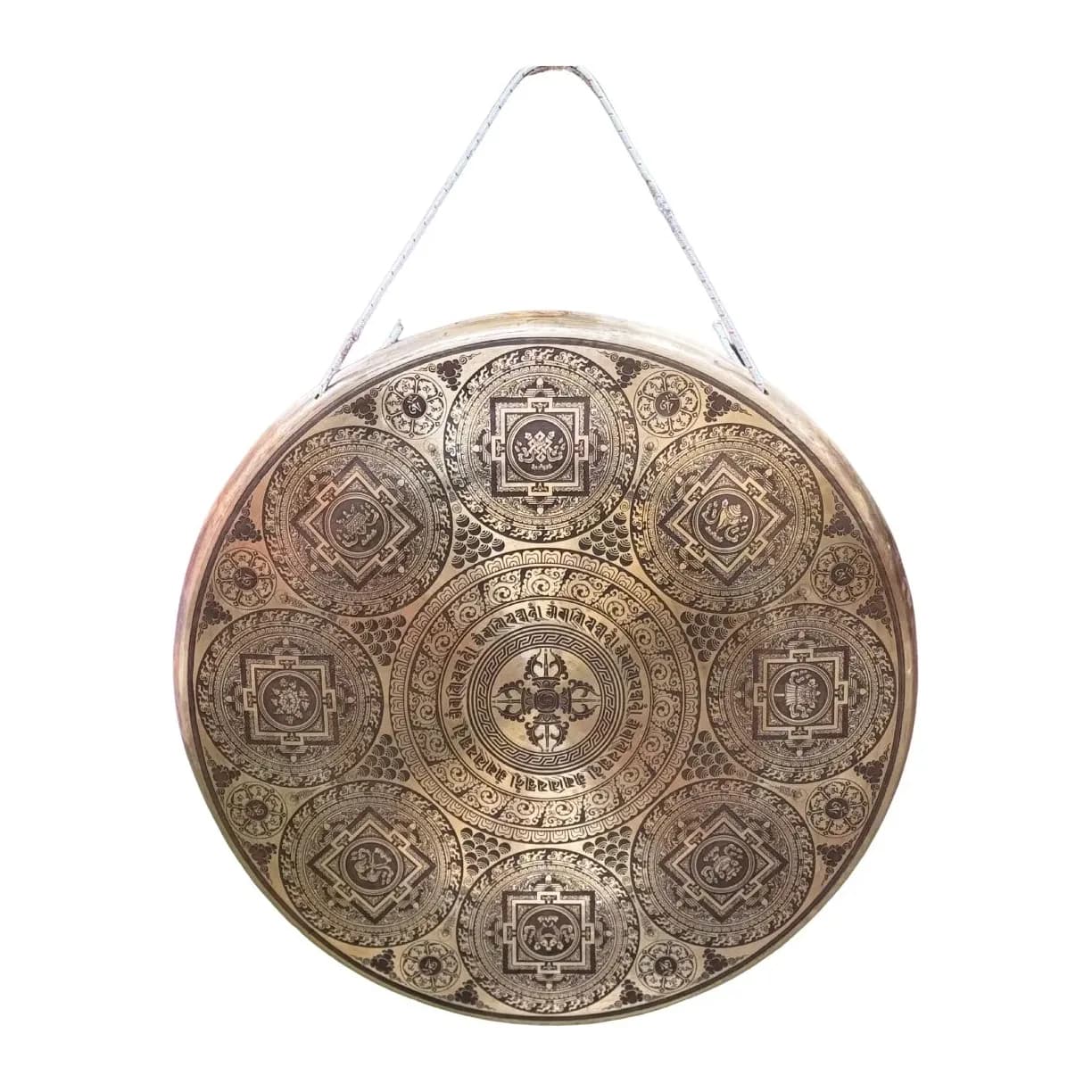
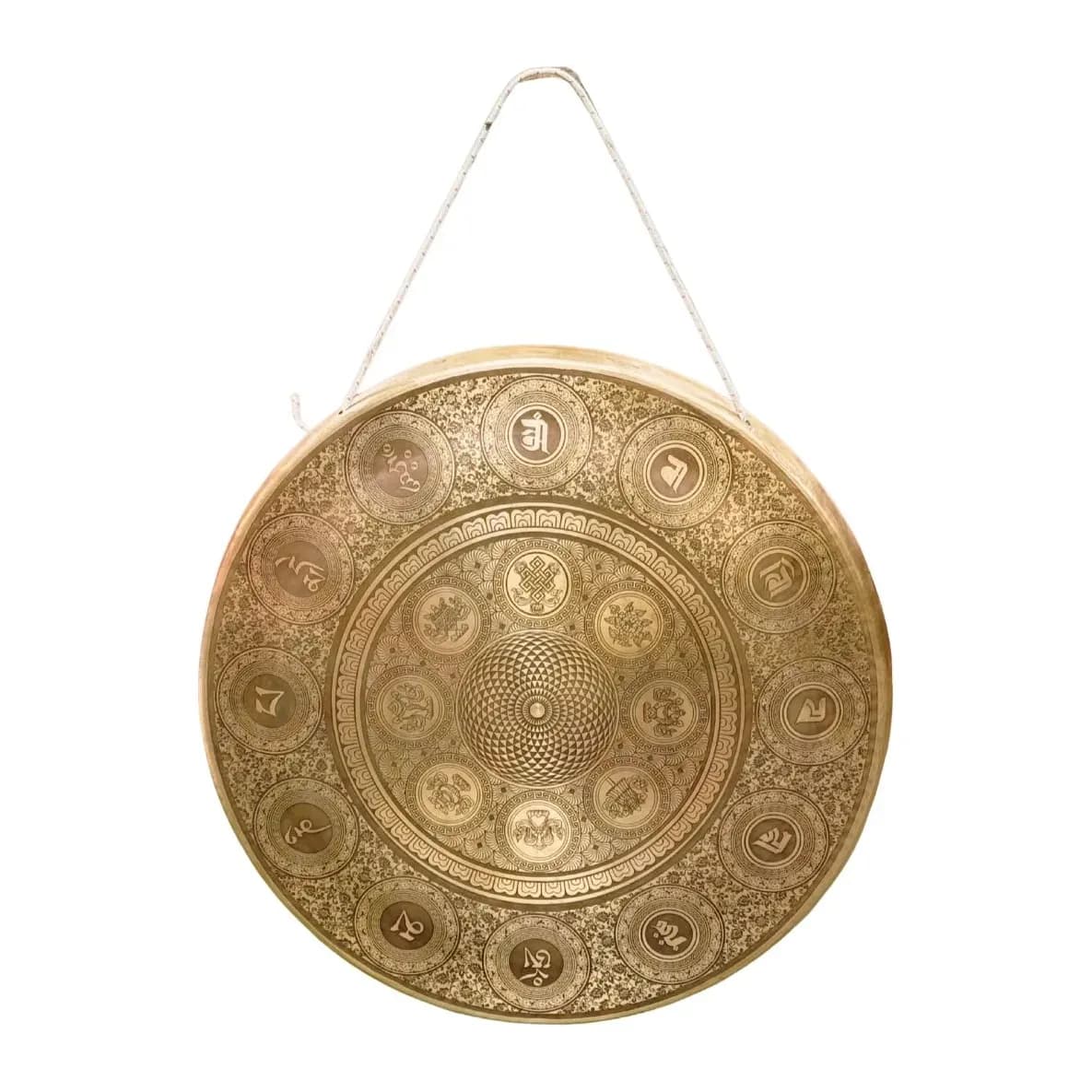
A struck gong marks the beginning and end of practice across the Himalayas. Here's what the etched motifs mean, and how to play one properly.
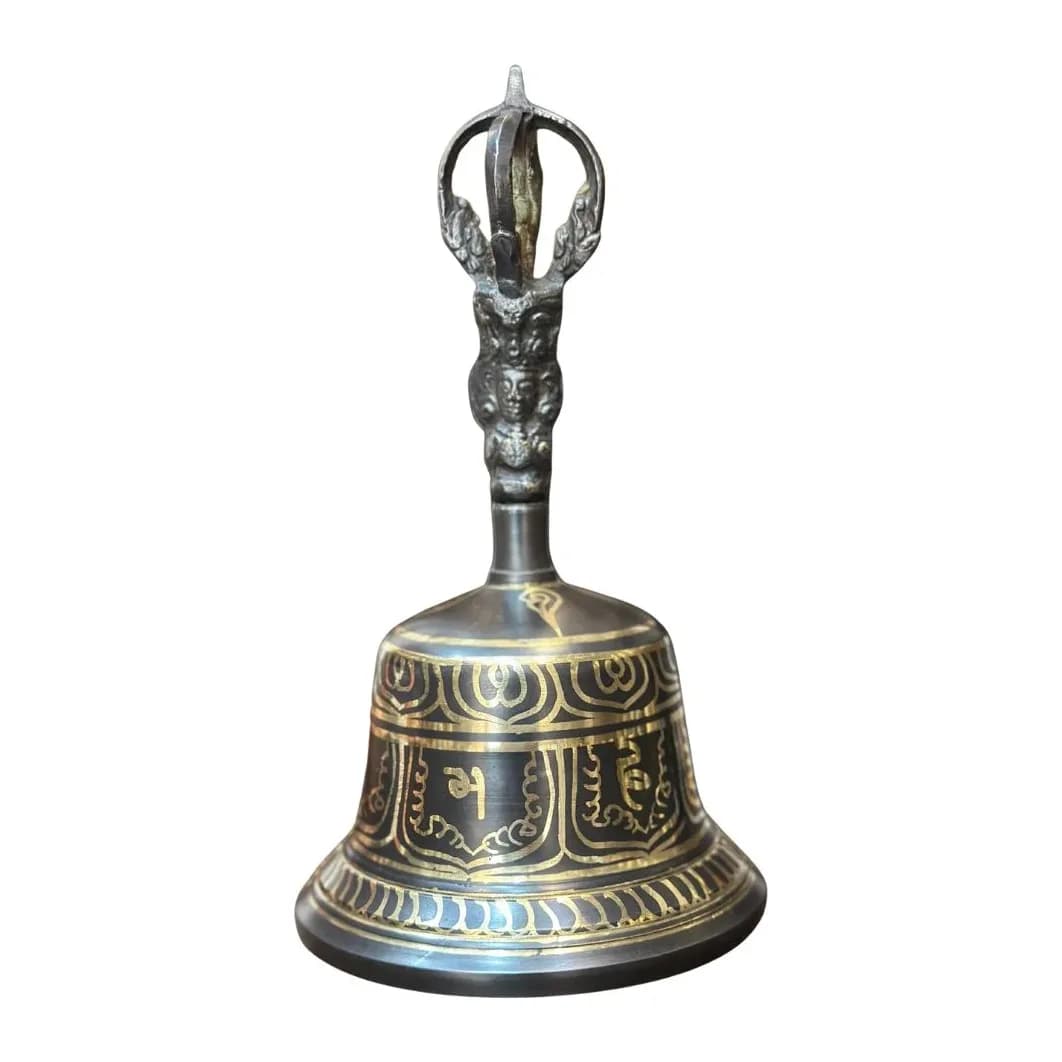
For over a thousand years, one community in Nepal's Kathmandu Valley has shaped the bronze objects at the center of Himalayan ritual life.